As an Amazon Associate, BeautyLara earns from qualifying purchases.
If your skin breaks out easily and reacts to almost everything, choosing a moisturizer can feel impossible. Rich creams clog pores, “oil-free” gels sting, and fragrance-heavy formulas leave you red and blotchy. Yet skipping moisturizer usually makes things worse: a dehydrated barrier becomes more inflamed and more prone to breakouts.
We compared the most trusted dermatologist-recommended moisturizers for sensitive, acne-prone skin, focusing on non-comedogenic formulas, minimal irritants and barrier-repairing ingredients. Here are the seven best options and how to pick the right one for your skin.
Best Moisturizers for Sensitive Acne-Prone Skin at a Glance
| Moisturizer | Best For | Texture | Key Ingredients |
|---|---|---|---|
| CeraVe PM Facial Moisturizing Lotion | Best overall | Light lotion | Ceramides, niacinamide, hyaluronic acid |
| La Roche-Posay Toleriane Double Repair | Very reactive skin | Light cream | Ceramide-3, niacinamide, prebiotic thermal water |
| Neutrogena Hydro Boost Gel-Cream | Oily skin | Gel-cream | Hyaluronic acid |
| Aveeno Calm + Restore Oat Gel | Redness | Gel | Prebiotic oat, feverfew |
| Paula’s Choice CLEAR Oil-Free Moisturizer | Active breakouts | Lightweight lotion | Antioxidants, calming botanicals |
| First Aid Beauty Ultra Repair Cream | Dry, flaky patches | Rich cream | Colloidal oatmeal, shea butter |
| Vanicream Moisturizing Cream | Ultra-minimal routines | Thick cream | Petrolatum, sorbitol |
Why the Right Moisturizer Matters
Acne treatments such as benzoyl peroxide, salicylic acid and retinoids are drying. When the barrier is compromised, skin loses water, becomes more reactive and can even produce more oil to compensate. A well-formulated moisturizer restores lipids, calms inflammation and helps you tolerate the treatments that actually clear breakouts.
What to Look For in a Moisturizer
- Non-comedogenic: formulated and tested not to clog pores.
- Fragrance-free: fragrance (including essential oils) is one of the most common triggers of irritation.
- Barrier ingredients: ceramides, niacinamide, glycerin and hyaluronic acid.
- Soothing agents: colloidal oatmeal, allantoin, panthenol or centella.
- The right texture: gels and gel-creams for oily skin, lotions for combination skin, creams for dry or treatment-stressed skin.
The 7 Best Moisturizers for Sensitive Acne-Prone Skin
CeraVe PM Facial Moisturizing Lotion
Our top pick balances hydration and lightness perfectly. Three essential ceramides rebuild the barrier, while 4% niacinamide calms redness and helps regulate oil. It absorbs in seconds, layers well under acne treatments and is fragrance-free. Despite the name, many people use it morning and night.
La Roche-Posay Toleriane Double Repair Face Moisturizer
Ideal for skin that reacts to almost everything. The formula is short, fragrance-free and built around ceramide-3, niacinamide and glycerin. Its slightly creamier texture makes it a good choice in colder months or alongside retinoids.
Neutrogena Hydro Boost Gel-Cream
A favorite for oily and combination skin. The water-light gel floods skin with hyaluronic acid and leaves no greasy film. Choose the fragrance-free version if your skin is sensitive.
Aveeno Calm + Restore Oat Gel Moisturizer
Designed for reactive, easily flushed skin. Prebiotic oat and feverfew soothe visible redness, and the bouncy gel texture feels cooling without clogging pores.
Paula’s Choice CLEAR Oil-Free Moisturizer
Part of a dedicated acne system, this ultra-light lotion hydrates without shine and contains antioxidants that support healing post-breakout marks. A smart choice if you are actively treating acne.
First Aid Beauty Ultra Repair Cream
When acne treatments leave you dry and flaky, this rich whipped cream rescues the barrier. Colloidal oatmeal relieves itch and irritation. Best used at night or on dry areas if you are oily elsewhere.
Vanicream Moisturizing Cream
The ultimate minimalist option: free of dyes, fragrance, lanolin, parabens and formaldehyde releasers. Dermatologists often recommend it for patients on prescription acne medication.
A Simple Routine for Sensitive Acne-Prone Skin
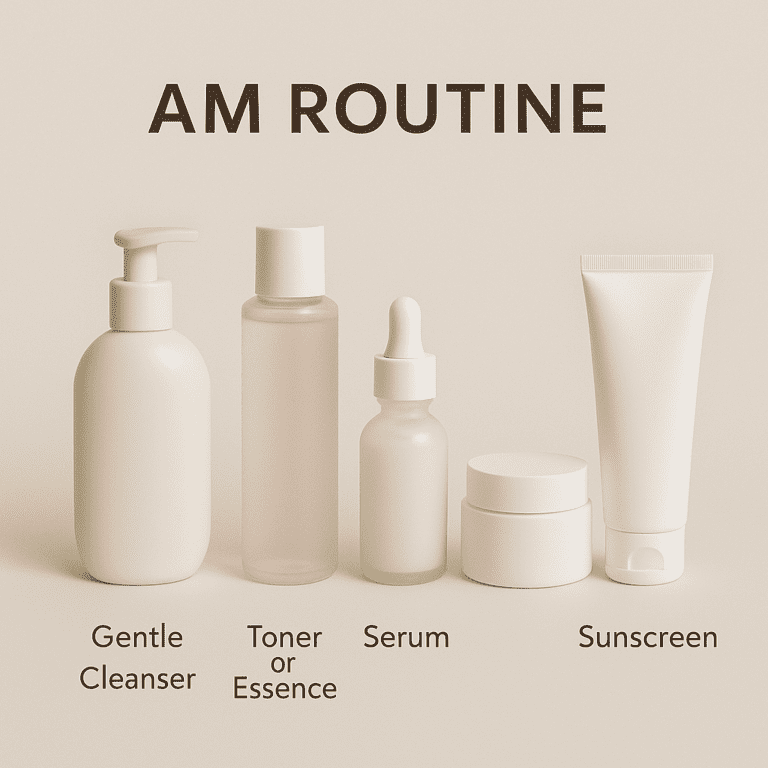
- Cleanse with a gentle, low-foam, fragrance-free cleanser.
- Treat with one acne active (for example, salicylic acid or adapalene) — not several at once.
- Moisturize with one of the formulas above.
- Protect every morning with a non-comedogenic SPF 30+.
Ingredients to Seek and Avoid
Seek: ceramides, niacinamide, glycerin, hyaluronic acid, panthenol, colloidal oatmeal, squalane.
Avoid or patch-test: fragrance, essential oils, denatured alcohol in high amounts, coconut oil, isopropyl myristate and heavy butters on the face.
Frequently Asked Questions
Should acne-prone skin use moisturizer at all?
Yes. Moisturizer protects the barrier, reduces irritation from acne treatments and can actually lead to fewer breakouts over time.
Is a gel or cream better for acne-prone skin?
Gels and gel-creams suit oily skin; lotions and light creams are better for combination, dry or treatment-irritated skin.
How do I patch-test a new moisturizer?
Apply a small amount along the jawline or behind the ear once a day for 5–7 days. If there is no redness, itching or new bumps, it is likely safe.
Can moisturizer cause purging?
No. Purging happens with ingredients that speed cell turnover, such as retinoids or acids. New breakouts from a plain moisturizer usually mean it is not right for you.
Conclusion
The best moisturizer for sensitive, acne-prone skin is gentle, fragrance-free and non-comedogenic while still repairing the barrier. For most people, CeraVe PM is the safest place to start; very reactive skin should try La Roche-Posay Toleriane Double Repair, and oily skin will love Neutrogena Hydro Boost. Introduce one new product at a time and give it at least four weeks.